Performance Max is a type of PPC, so the real choice is between manual, Search-led PPC and Google’s automated Performance Max.
One gives you control, the other gives you reach, and many accounts do best running both.
The confusion is understandable. “PPC” covers all pay-per-click advertising on Google, while “Performance Max” is one campaign type inside it. Comparing them is really comparing a hands-on, keyword-driven approach against a fully automated one.
What is the difference between PPC and Performance Max?
Standard PPC, usually Search campaigns, targets specific keywords with manual control. Performance Max uses AI to run one campaign across all of Google’s channels at once.
The two work very differently:
- Standard PPC (Search). You choose keywords, write ads, set negatives and see exactly which term drove each conversion. You stay in the driving seat.
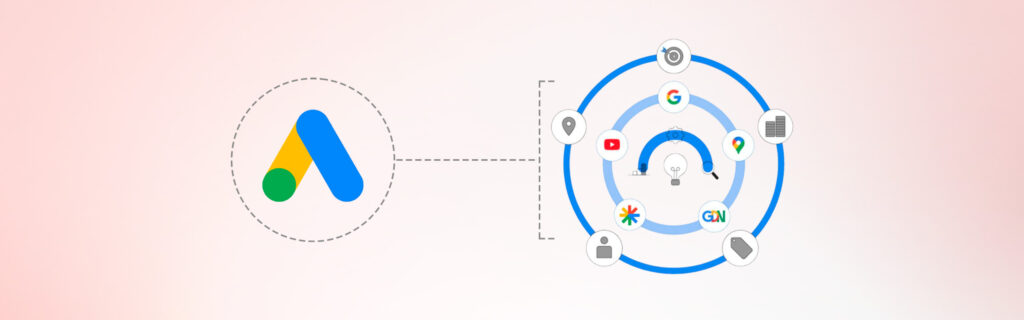
- Performance Max. You give Google a goal, a budget and a set of creative assets. Its automation then serves ads across Search, YouTube, Display, Discover, Gmail and Maps, deciding placements and bids for you.
So Performance Max trades control for reach and automation, while Search PPC trades reach for precision and transparency.

How PPC and Performance Max compare
The table below summarises the trade-offs. Neither column is the right answer on its own, which is why the choice depends on your goals.
| Factor | Standard PPC (Search) | Performance Max |
|---|---|---|
| Control | High: keywords, bids, negatives | Low: goals and assets only |
| Reach | Search results | All Google channels at once |
| Targeting | Keyword and intent led | Audience signals plus AI |
| Reporting | Transparent by keyword and ad | Aggregated, limited by channel and asset |
| Creative needs | Text-light, simple to run | Asset-hungry: images, video, copy |
| Learning phase | Faster to stabilise | Often several weeks |
| Data needs | Works at lower volume | Needs steady conversion data to learn |
| Best for | Control, intent, lead quality | Scale, breadth, strong creative and data |
Where standard PPC (Search) wins
Search-led PPC is the stronger choice when control and intent matter more than reach. You are targeting people actively searching for what you sell.
It tends to win when you need:
- Tight control. Keywords, match types and negatives let you shape exactly who sees your ads.
- High intent. Search captures people with a clear, immediate need, which suits lead generation.
- Transparency. You can see which keyword and ad drove each enquiry and optimise with confidence.
- Lower data volume. Search can perform without the steady conversion volume automation depends on.
A solid Paid Search/PPC setup is also easier to diagnose when results dip, because the data points to a cause.
Where Performance Max wins
Performance Max is the stronger choice when you want reach and scale, and you can feed it good creative and clean data. It finds customers across Google that a Search-only account would miss.
It tends to win when you have:
- Breadth as a goal. One campaign reaches Search, YouTube, Display, Discover, Gmail and Maps.
- Strong creative assets. The more quality images, video and copy you provide, the better it performs.
- Reliable conversion data. Automation needs steady signals to learn what a good customer looks like.
- Capacity to scale. It suits accounts ready to grow volume rather than guard a narrow niche.
For NeuroMoves, Google Performance Max was a core tactic in a campaign that delivered a 6.33 ROI and $285k in new revenue within the first three months, with some locations reaching capacity.
See the full case

Should you use PPC or Performance Max?
There is rarely a clean either/or. The honest approach is to weigh the criteria and, for many accounts, run both with clear roles. Use this checklist:
- Your priority. Choose Search PPC for control and intent, Performance Max for reach and scale.
- Your creative. A library of strong images and video favours Performance Max. Thin assets favour Search.
- Your data. Steady conversion volume helps Performance Max learn. Low volume suits Search.
- Your reporting needs. If you must see exactly what drove each lead, Search gives that clarity.
- Your stage. Defending a niche points to Search. Expanding into new audiences points to Performance Max.
In practice, many accounts pair the two: Search to capture high-intent demand and protect brand terms, Performance Max to scale reach across Google’s wider inventory. The mix matters more than the label.

How to run them well together
If you use both, give each a defined job so they support rather than compete. A few guardrails help:
- Protect brand terms in a dedicated Search campaign so Performance Max does not absorb cheap branded conversions.
- Feed accurate conversion data through reliable conversion tracking, since Performance Max only learns as well as the signals you send it.
- Keep creative fresh for Performance Max, and review asset performance as Google’s reporting allows.
- Compare incremental results, not surface metrics, so you know which campaign is genuinely adding enquiries.
Frequently asked questions
Is Performance Max part of PPC?
Yes. PPC means pay-per-click advertising, and Performance Max is one of Google’s pay-per-click campaign types. The common phrasing “PPC vs Performance Max” really compares manual, keyword-led Search campaigns with Google’s automated Performance Max. Both charge on a pay-per-click or conversion basis and both sit inside the same Google Ads account.
Can you run Performance Max and Search campaigns together?
Yes, and many accounts do. A common structure uses Search to capture high-intent queries and protect brand terms, with Performance Max scaling reach across Google’s other channels. Give each a clear role and accurate conversion data so they complement each other rather than bidding against the same users.
Does Performance Max cannibalise branded search?
It can. Performance Max may absorb cheap branded conversions and make its results look stronger than they are. The usual safeguard is a dedicated branded Search campaign and close monitoring of where conversions actually come from. Comparing incremental performance, rather than headline totals, keeps the picture honest.
How long is the Performance Max learning phase?
Plan for several weeks before results stabilise, sometimes longer. Performance Max relies on machine learning, so it needs time and steady conversion data to find patterns. Avoid heavy changes during this period, since each major edit can reset the learning. Judge it on a trend over weeks rather than a few early days.
Does Performance Max work for lead generation?
It can, but it needs care. Lead-gen accounts often have lower conversion volume and risk attracting low-quality enquiries if the signals are weak. Feeding it strong first-party data, using qualified conversions as the goal, and pairing it with a controlled Search campaign all improve the odds of quality leads rather than volume alone.
Choose the mix that fits your goals
Performance Max and Search PPC are different tools for different jobs. Search gives you control and intent. Performance Max gives you reach and scale. The right answer depends on your goals, your creative and your data, and often it is a deliberate blend of both.
If you would like help structuring that mix, SOMO’s PPC team can build a plan that uses each campaign type where it performs best.