Yes, ChatGPT now shows ads. They run in a pilot on the Free and Go tiers, and whether your business should advertise on them depends on your market, your category and your appetite for an unproven channel.
OpenAI spent years saying ChatGPT would stay ad-free. That changed when it began testing ads, which makes the platform a live advertising question for the first time.
Does ChatGPT have ads?
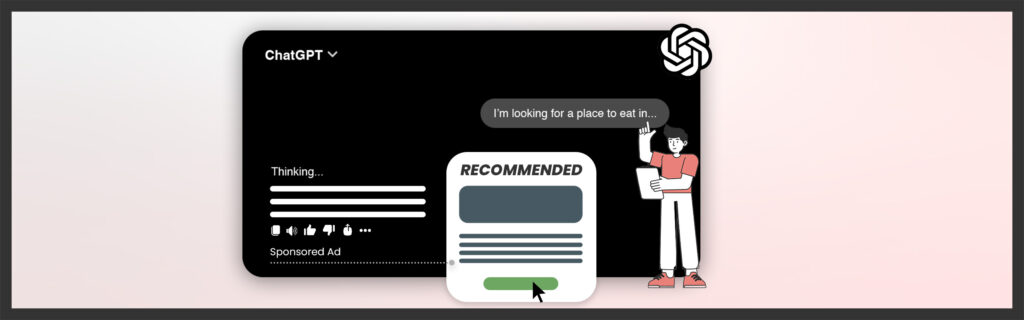
ChatGPT has ads in a pilot that OpenAI began testing on 09/02/2026. It is a controlled test, not a finished ad product.
Here is what the pilot looks like today:
- Who sees them. Logged-in adults on the Free and Go tiers. Plus, Pro, Business, Enterprise and Education tiers show no ads.
- What they look like. Each ad is clearly labelled as sponsored and kept visually separate from the answer.
- What they do not do. Ads do not change ChatGPT’s answers. OpenAI states that responses stay independent of who is advertising.
So the platform now carries advertising, but only for part of its user base and only in the markets running the test.
Where ChatGPT ads are live
The pilot started in the United States and has expanded in stages. The list below is a snapshot of a fast-moving rollout, so check OpenAI’s current markets before you plan around it.
- United States: the test launched on 09/02/2026.
- Canada, Australia and New Zealand: added on 26/03/2026.
- United Kingdom: went live on 06/06/2026, the first market outside North America and Australasia.
- Mexico, Brazil, Japan and South Korea: announced on 07/05/2026 and expected to follow within weeks, with no confirmed live date at the time of writing.
OpenAI has signalled it intends to reach more markets over time. The takeaway is that this is no longer a US-only story, so it is worth understanding even where the test has not yet arrived.
How ChatGPT ads work
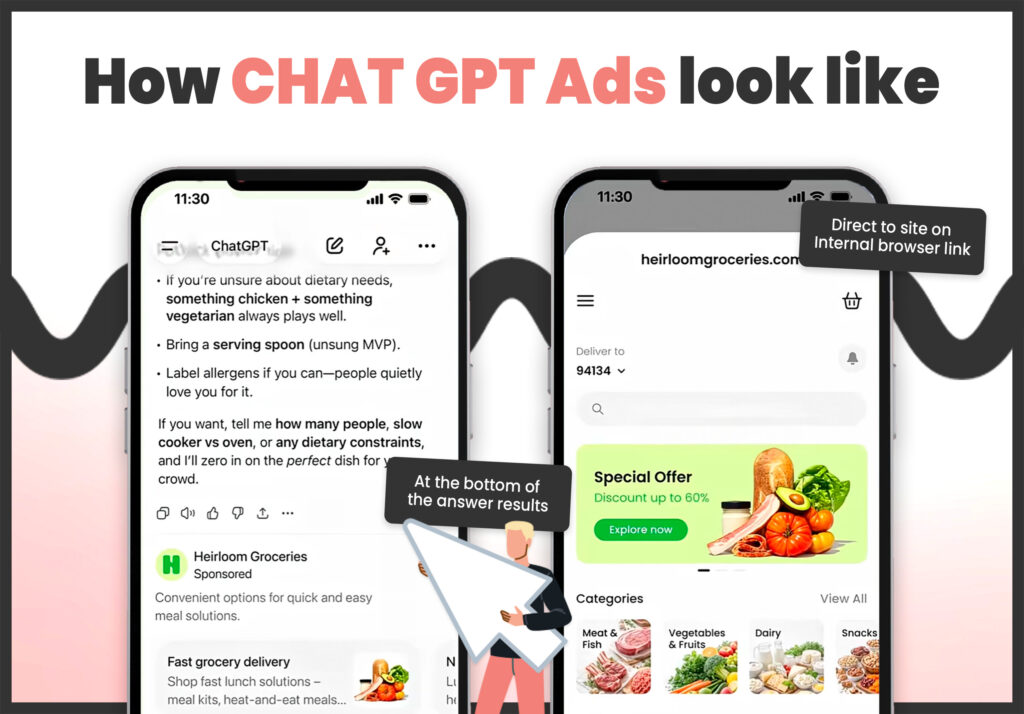
You can run ads on ChatGPT by joining OpenAI’s advertiser programme. Businesses register interest through OpenAI’s advertisers page, and the system matches ads to conversations.
The mechanics during the pilot:
- Targeting by context: OpenAI matches an advertiser’s ad to the topic of the chat, the user’s past chats and their past interactions with ads. Someone researching recipes might see a meal-kit ad.
- Privacy by design: Advertisers cannot see chats, history, memories or personal details. They receive only aggregate data such as views and clicks.
- Limited formats for now: OpenAI describes the current test as a starting point and has said it will add more formats, objectives and buying models later.
This is closer to early-stage contextual advertising than to the mature targeting and reporting that Google Ads or Meta offer.
Who cannot advertise on ChatGPT yet

Some businesses are excluded by design during the pilot. This matters as much as knowing how to take part.
- Sensitive and regulated categories are off-limits: OpenAI says ads are not eligible to appear near topics such as health, mental health and politics.
- Under-18 users are excluded: Ads do not show in accounts OpenAI identifies as belonging to people under 18.
If your brand sits in one of the restricted categories, the route to visibility inside ChatGPT is still being cited in its answers through generative engine optimisation, rather than buying space..
Should your business advertise on ChatGPT?
There is no single right answer yet. The honest position during a pilot is to weigh the criteria and decide where your business sits. Use these as a checklist:
- Your market is live: The test has to be running where your customers are before a spend makes sense.
- Your audience uses the Free or Go tiers: Ads reach those users, which skews towards broad consumer audiences rather than paying power users.
- Your category is permitted: Health, mental health and political advertisers are excluded for now.
- Your offer fits a decision moment: Ads land while people compare options, so products tied to active research have the clearest fit.
- You can prove value with limited data: Native reporting is aggregate, so you will need your own tracking to judge incremental results.
- You can treat it as a test, not a core channel: Formats and buying models are still immature, which suits an experimental budget rather than a primary one.
The more of these you can answer with a confident yes, the stronger the case for an early test. If several are a no, waiting for the product to mature is a defensible call.
How to approach an early test
If you decide to try it, treat the pilot as a learning exercise rather than a performance channel. A measured approach protects your budget while the platform settles.
- Set a small, ring-fenced budget you are comfortable treating as research.
- Define one clear outcome to measure, and build your own tracking around it.
- Compare against your existing channels so you can see incremental value rather than vanity metrics.
- Review often and expect the rules and formats to change as OpenAI iterates.
Frequently asked questions
Will advertising on ChatGPT change how often it cites my brand?
No. OpenAI keeps ads separate from answers, so paying to advertise does not make ChatGPT recommend you in its organic responses. Earning citations is a different discipline, driven by authority and content rather than ad spend. Treat advertising and organic AI visibility as two separate workstreams with different tactics and goals.
How much do ChatGPT ads cost?
OpenAI has not published a standard pricing or self-serve buying model during the pilot. Access runs through its advertiser programme, and the company has said pricing, formats and objectives will evolve as the test expands. Until a public buying model exists, treat any spend as experimental and confirm terms directly through OpenAI.
Can Plus or Pro subscribers see my ChatGPT ads?
No. Ads appear only on the Free and Go tiers during the pilot. Plus, Pro, Business, Enterprise and Education subscribers see no ads, so anyone advertising is reaching free and lower-cost users rather than the platform’s paying power users. That shapes which audiences and offers fit the channel today.
Is “ChatGPT ads” the same as using ChatGPT to make ads creative?
No, these are two different tasks. Advertising on ChatGPT means buying placements inside the app. Using ChatGPT to write ad copy or generate creative is a separate workflow that does not involve OpenAI’s advertiser programme. This article covers the first. The second is a topic we will cover on its own.
Weigh the criteria before you spend
ChatGPT ads are real, expanding, and still early. For some consumer brands in live markets the case for a small test is already there. For regulated sectors, and for businesses that need mature reporting, waiting is reasonable.
If you want help deciding whether this channel fits your goals, SOMO’s PPC team can pressure-test the opportunity against your wider digital strategy.